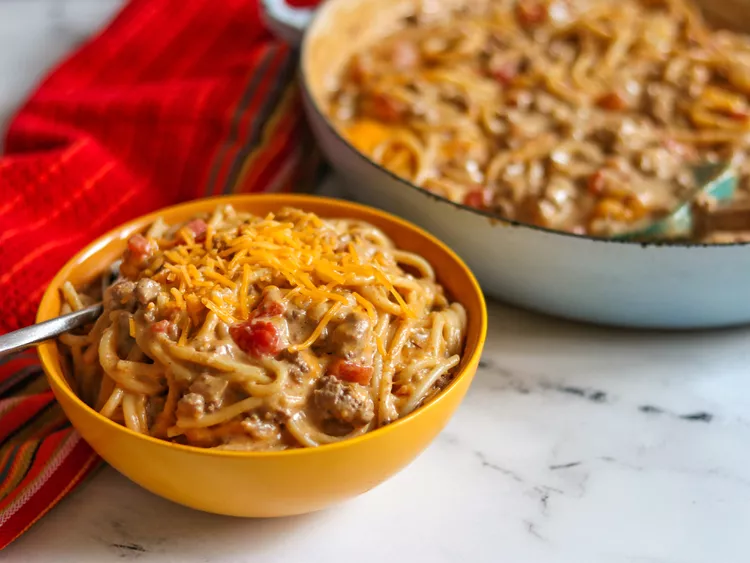
Easy Taco Pasta Recipe: A Creamy, Cheesy One-Pot Dinner
Taco pasta brings two dependable comfort-food favorites together in one skillet: the savory, chile-spiced flavors of tacos and the creamy, cheesy appeal of pasta. Ground beef, tomatoes, taco seasoning, tender pasta, and plenty of melted cheese create a hearty dinner that tastes familiar while still feeling more interesting than an ordinary weeknight pasta.
This easy taco pasta recipe is especially useful on busy evenings because most of the cooking happens in a single pan. The pasta simmers directly in the seasoned beef and tomato mixture, allowing the noodles to absorb the cooking liquid and spices while releasing starch that naturally thickens the sauce.
The result is a creamy taco pasta with a rich, clingy sauce rather than a watery one. Cheddar provides the classic cheesy finish, while a little cream cheese rounds out the acidity of the tomatoes and gives the dish extra body.
Ready in about 35 minutes, this one-pot taco pasta is an excellent family dinner, meal-prep option, or casual crowd-pleaser.
Prep time: 10 minutes
Cook time: 25 minutes
Total time: 35 minutes
Servings: 6
Why This Taco Pasta Recipe Works
A successful taco pasta needs to balance spice, richness, acidity, and texture. Too much liquid makes it soupy, while excessive cheese can overwhelm the taco flavors. This recipe uses enough broth to cook the pasta while maintaining a thick sauce.
Browning the ground beef first develops deeper savory flavor. Cooking the onion with the beef gives it time to soften and become sweet, while briefly toasting the taco seasoning intensifies its spices.
Cooking the pasta directly in the sauce is also important. Instead of draining away the starch released by the noodles, that starch stays in the skillet and helps bind the tomatoes, broth, cream cheese, and cheddar into a cohesive sauce.
Taco Pasta Ingredients
For the Pasta
- 1 tablespoon olive oil
- 1 pound lean ground beef
- 1 medium yellow onion, finely diced
- 3 garlic cloves, minced
- 2 tablespoons taco seasoning
- 1 tablespoon tomato paste
- 1 can (14.5 ounces) diced tomatoes, undrained
- 1 can (10 ounces) diced tomatoes with green chiles, undrained
- 2 1/2 cups low-sodium beef broth
- 8 ounces short pasta, such as rotini, shells, or penne
- 4 ounces cream cheese, softened and cubed
- 1 1/2 cups shredded sharp cheddar cheese
- 1/2 teaspoon kosher salt, plus more as needed
- 1/4 teaspoon freshly ground black pepper
For Serving
- 2 tablespoons chopped fresh cilantro
- 2 green onions, thinly sliced
- 1 small avocado, diced
- Sour cream, optional
- Lime wedges, optional
- Crushed tortilla chips, optional
- Sliced jalapeños, optional
How to Make Taco Pasta
1. Brown the Ground Beef
Heat the olive oil in a large, deep skillet or Dutch oven over medium-high heat.
Add the ground beef and onion. Cook for 6 to 8 minutes, breaking the meat into small pieces with a wooden spoon, until the beef is browned and the onion is tender.
If your beef releases a significant amount of excess fat, carefully spoon or drain most of it from the pan.
2. Add the Garlic and Seasonings
Reduce the heat to medium. Add the minced garlic, taco seasoning, and tomato paste.
Cook for about 1 minute, stirring constantly. The garlic should smell fragrant and the tomato paste should darken slightly.
This short cooking period helps bloom the spices and removes the raw flavor from the tomato paste.
3. Build the Taco Pasta Sauce
Add the diced tomatoes, tomatoes with green chiles, beef broth, salt, and black pepper.
Stir thoroughly, scraping the bottom of the skillet to release any browned bits left from cooking the beef.
Bring the mixture to a gentle boil.
4. Cook the Pasta
Stir the dry pasta directly into the skillet.
Reduce the heat to medium-low and maintain a steady simmer. Cover partially and cook according to the pasta’s package timing, usually 10 to 13 minutes, stirring every few minutes.
Keep a particularly close eye on the skillet during the final few minutes because the sauce will thicken quickly as the pasta absorbs the broth.
The pasta should be al dente when finished. If the pan becomes dry before the noodles are tender, add additional broth or hot water 1/4 cup at a time.
5. Make It Creamy
Reduce the heat to low.
Add the softened cream cheese and stir until completely melted into the sauce. Continue stirring for 1 to 2 minutes, until the sauce looks smooth and creamy.
Avoid boiling the mixture vigorously after adding the cream cheese, as gentle heat produces a smoother sauce.
6. Add the Cheddar
Remove the skillet from the heat and add the shredded cheddar gradually, stirring between additions until melted.
Taste and adjust the salt, pepper, or taco seasoning as necessary.
Let the taco pasta rest for about 3 minutes before serving. The sauce will continue to thicken as it stands.
7. Garnish and Serve
Spoon the hot pasta into shallow bowls and finish with chopped cilantro and green onions.
Add avocado, sour cream, jalapeños, crushed tortilla chips, or a squeeze of fresh lime according to preference.
Serve immediately while the sauce is creamy and the cheese is fully melted.
Expert Tips for the Best Taco Pasta
Use freshly shredded cheese. Pre-shredded cheese often contains anti-caking ingredients that can prevent it from melting as smoothly. Shredding cheddar from a block produces a creamier sauce.
Choose short pasta. Rotini, shells, penne, and similar shapes work especially well because their ridges and cavities hold the thick taco sauce.
Keep the pasta at a simmer. An aggressive boil can evaporate the cooking liquid before the noodles have softened.
Stir regularly. Because the pasta cooks directly in the sauce, it can stick to the bottom of the skillet if left unattended for too long.
Add cheese off the heat. Excessive heat can cause cheddar to become oily or grainy. Removing the skillet from the burner before stirring it in encourages a smoother texture.
Let the pasta rest before serving. A few minutes of resting allows the starches and cheese to finish thickening the sauce.
Taco Pasta Variations
Chicken Taco Pasta
Replace the ground beef with 1 pound of ground chicken or turkey. Because these meats are leaner, you may need an additional teaspoon of olive oil when browning them.
Spicy Taco Pasta
Add 1 finely chopped jalapeño with the onion or increase the amount of diced green chiles. A small pinch of cayenne pepper can also provide additional heat without changing the texture.
Black Bean Taco Pasta
For a meatless version, omit the beef and add two 15-ounce cans of black beans, rinsed and drained. Sauté the onion first, then continue with the garlic, seasoning, and tomato paste.
Vegetable broth can replace the beef broth.
Corn and Bean Taco Pasta
Stir in 1 cup of drained canned corn or thawed frozen corn along with a drained 15-ounce can of black beans. This variation adds sweetness, texture, and extra fiber.
Gluten-Free Taco Pasta
Use your preferred short gluten-free pasta and verify that the taco seasoning and broth are labeled gluten-free. Because gluten-free pasta varieties absorb liquid differently, monitor the skillet carefully and add broth as necessary.
Lighter Taco Pasta
Use lean ground turkey in place of beef and reduced-fat cream cheese if desired. You can also reduce the cheddar to 1 cup while maintaining a satisfying cheesy finish.
What to Serve With Taco Pasta
Taco pasta is rich enough to serve as a complete meal, but fresh, crisp side dishes provide an appealing contrast.
A simple green salad dressed with lime vinaigrette works particularly well. Roasted corn, grilled vegetables, tomato-avocado salad, or crunchy cabbage slaw are also good choices.
For a larger meal, serve the pasta alongside warm tortillas, seasoned black beans, or Mexican-style rice.
Fresh garnishes are especially useful with this dish. Avocado contributes buttery richness, cilantro adds freshness, lime provides acidity, and crushed tortilla chips create a crisp contrast against the creamy noodles.
Storage and Make-Ahead Notes
Refrigerating
Allow leftover taco pasta to cool before transferring it to an airtight container.
Refrigerate for up to 3 to 4 days.
The noodles will continue absorbing sauce during storage, so refrigerated taco pasta will be thicker than when freshly cooked.
Reheating
For the stovetop, place the desired amount in a saucepan or skillet over medium-low heat. Add a splash of beef broth, water, or milk and stir frequently until thoroughly heated.
Individual portions can also be reheated in the microwave. Add a tablespoon or two of liquid, cover loosely, and heat in short intervals, stirring between each interval.
Freezing
Taco pasta can be frozen, although the texture of both the pasta and cream cheese sauce may soften slightly after thawing.
Transfer completely cooled portions to freezer-safe containers and freeze for up to 2 months.
Thaw overnight in the refrigerator before reheating gently. Adding a small amount of broth while reheating helps restore the sauce.
Making It Ahead
For the best pasta texture, prepare the seasoned beef and tomato mixture up to 2 days ahead and refrigerate it separately.
When ready to serve, return the mixture to a skillet, add the broth and pasta, and continue with the recipe. Finish with the cream cheese and cheddar just before serving.
Nutrition Information
Estimated nutrition per serving, based on 6 servings:
| Nutrient | Amount Per Serving |
|---|---|
| Calories | 560 kcal |
| Protein | 30 g |
| Fat | 31 g |
| Saturated Fat | 15 g |
| Carbohydrates | 41 g |
| Fiber | 4 g |
| Sugar | 7 g |
| Sodium | 880 mg |
Nutrition values are estimates and will vary depending on the ground beef, pasta, taco seasoning, broth, cheese, and toppings used.
Frequently Asked Questions
What is taco pasta made of?
Taco pasta typically combines seasoned ground meat, tomatoes, taco seasoning, pasta, broth, and cheese. This version also includes cream cheese for a richer and smoother sauce.
Can you cook pasta directly in taco sauce?
Yes. Cooking pasta directly in the seasoned sauce allows the noodles to absorb more flavor while their starch naturally thickens the surrounding liquid. The key is maintaining enough liquid for the pasta to cook completely.
How do you keep taco pasta creamy?
Use moderate heat once the dairy is added. Stir softened cream cheese into the cooked pasta over low heat, then remove the skillet from the burner before adding shredded cheddar.
What pasta shape is best for taco pasta?
Short shapes such as rotini, medium shells, penne, and cavatappi are ideal. They are sturdy enough for one-pot cooking and capture plenty of the beefy, cheesy sauce.
Can taco pasta be made without cream cheese?
Yes. Omit the cream cheese and add another 1/2 cup shredded cheddar for a more traditional cheesy tomato sauce. Alternatively, stir in a small amount of sour cream after removing the skillet from the heat.
Final Thoughts
This easy taco pasta recipe delivers the best parts of taco night in a warm, satisfying pasta dinner. Seasoned ground beef and tomatoes create a savory foundation, while cream cheese and sharp cheddar transform the cooking liquid into a thick sauce that coats every noodle.
Just as importantly, the one-pot technique keeps preparation and cleanup manageable. With a total cooking time of roughly 35 minutes and plenty of room for substitutions and toppings, creamy taco pasta is an adaptable recipe worth keeping in regular weeknight rotation.
Serve it straight from the skillet with avocado, cilantro, lime, and crunchy tortilla chips for a colorful finishing touch. The combination of tender pasta, seasoned beef, melted cheese, fresh toppings, and gentle chile heat makes this a dependable dinner for both family meals and casual gatherings.