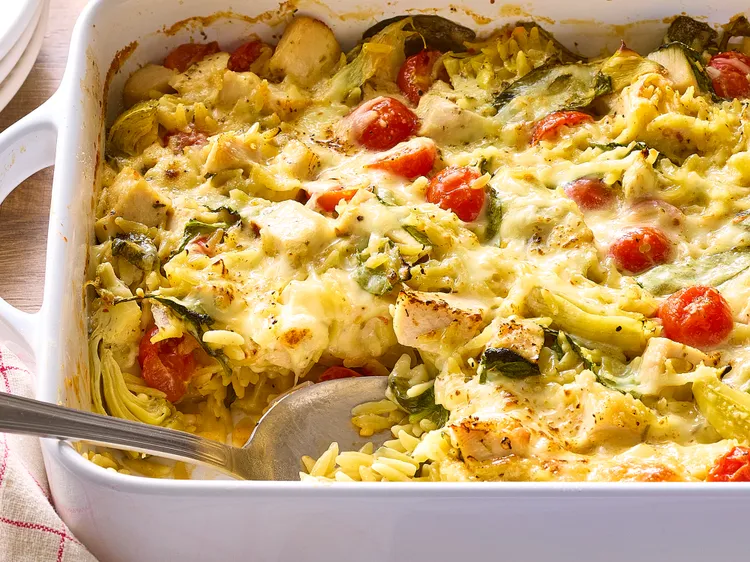
Baked Chicken and Artichoke Orzo Casserole Recipe: A Creamy, One-Pan Dinner
Baked Chicken and Artichoke Orzo Casserole is the kind of comforting dinner that delivers creamy pasta, tender chicken, vegetables, and plenty of savory flavor without requiring a sink full of dishes. Orzo cooks directly in seasoned broth beneath juicy chicken, absorbing the cooking juices as it bakes, while artichoke hearts, spinach, Parmesan, garlic, and lemon give the casserole a bright Mediterranean character.
What makes this chicken and artichoke orzo casserole especially useful is the balance between richness and freshness. Parmesan provides savory depth, a modest amount of cream creates a silky finish, and lemon keeps everything from tasting too heavy. Artichoke hearts add their distinctive tang and tender texture, while spinach folds almost invisibly into the finished dish.
It is an excellent choice for a family dinner, casual entertaining, or meal prep, and most of the cooking happens unattended in the oven.
Prep time: 20 minutes
Cook time: 40–45 minutes
Total time: About 1 hour
Servings: 6
Ingredients
For the Chicken
- 1 1/2 pounds boneless, skinless chicken thighs
- 1 tablespoon olive oil
- 1 teaspoon Italian seasoning
- 1 teaspoon kosher salt
- 1/2 teaspoon garlic powder
- 1/2 teaspoon freshly ground black pepper
For the Artichoke Orzo
- 1 tablespoon olive oil
- 1 small yellow onion, finely chopped
- 3 garlic cloves, minced
- 1 1/2 cups uncooked orzo
- 1 can (14 ounces) artichoke hearts, drained and quartered
- 3 cups low-sodium chicken broth
- 1/2 cup heavy cream
- 1 teaspoon Italian seasoning
- 1/2 teaspoon kosher salt, plus more as needed
- 1/4 teaspoon crushed red pepper flakes, optional
- 2 packed cups baby spinach, roughly chopped
- 3/4 cup finely grated Parmesan cheese, divided
- 1 tablespoon fresh lemon juice
- 1 teaspoon finely grated lemon zest
For Serving
- 2 tablespoons chopped fresh parsley
- Lemon wedges
- Extra grated Parmesan
- Freshly ground black pepper
How to Make Baked Chicken and Artichoke Orzo Casserole
1. Heat the Oven
Preheat the oven to 375°F.
Lightly grease a 9-by-13-inch baking dish or use a large oven-safe skillet. A relatively shallow baking vessel helps the orzo cook evenly and gives the chicken enough exposed surface to brown.
2. Season the Chicken
Pat the chicken thighs dry with paper towels. Toss them with 1 tablespoon olive oil, Italian seasoning, salt, garlic powder, and black pepper.
Drying the chicken first helps the seasonings adhere and encourages better browning.
3. Sear the Chicken
Heat a large oven-safe skillet over medium-high heat. Add the seasoned chicken and sear for about 2 to 3 minutes per side.
The chicken does not need to cook through at this point. The goal is simply to develop some golden color before baking.
Transfer the chicken to a plate.
If you are using a separate casserole dish rather than an oven-safe skillet, continue preparing the orzo in the skillet before transferring it to the baking dish.
4. Build the Flavor Base
Reduce the heat to medium and add the remaining tablespoon of olive oil.
Add the chopped onion and cook for 3 to 4 minutes, stirring occasionally, until softened and translucent.
Add the garlic and cook for about 30 seconds, just until fragrant. Avoid browning the garlic, which can introduce bitterness.
5. Toast the Orzo
Stir the uncooked orzo into the onion mixture. Cook for 1 to 2 minutes, stirring frequently.
This short toasting step gives the pasta a slightly nuttier flavor and helps it maintain a pleasant texture as it bakes.
6. Add the Artichokes and Liquid
Add the drained artichoke hearts, chicken broth, heavy cream, Italian seasoning, salt, and red pepper flakes.
Stir thoroughly, scraping the bottom of the pan to release any browned bits left from searing the chicken.
If using a casserole dish, transfer the orzo mixture to it now.
7. Bake the Casserole
Arrange the seared chicken thighs over the orzo mixture.
Cover tightly with aluminum foil and bake for 20 minutes.
Remove the foil, stir the orzo gently around the chicken, and return the casserole to the oven uncovered. Continue baking for approximately 12 to 18 minutes, or until the orzo is tender and the chicken reaches at least 165°F internally in its thickest part.
Ovens and baking dishes vary, so begin checking the casserole toward the lower end of the cooking range. If the orzo looks dry before becoming tender, stir in 1/4 to 1/2 cup additional hot broth.
8. Finish With Spinach, Parmesan, and Lemon
Remove the casserole from the oven. Transfer the chicken temporarily to a clean plate if necessary to make stirring easier.
Immediately stir the spinach, 1/2 cup Parmesan, lemon juice, and lemon zest into the hot orzo.
The residual heat should wilt the spinach within a minute or two.
Taste and adjust the salt, pepper, or lemon juice as needed.
9. Add the Final Parmesan
Return the chicken to the casserole and sprinkle the remaining 1/4 cup Parmesan over the top.
For additional browning, place the casserole under the broiler for 1 to 2 minutes, watching it closely.
Allow the casserole to rest for 5 minutes before serving. This short resting period gives the orzo time to absorb excess liquid and develop its creamy final consistency.
Why This Chicken Artichoke Orzo Casserole Works
Orzo may look like rice, but it is pasta, which means it releases starch as it cooks. Baking it directly in broth and cream allows those starches to naturally thicken the cooking liquid.
There is no need for a flour-based sauce.
Chicken thighs are particularly well suited to this method because they remain tender during baking and contribute flavorful juices to the orzo. Meanwhile, artichokes and lemon provide acidity that balances the cream and Parmesan.
The result falls somewhere between a traditional baked pasta casserole and creamy stovetop orzo: substantial enough for a complete dinner but softer and silkier than most baked pasta dishes.
Expert Tips for the Best Baked Chicken and Artichoke Orzo
Do Not Rinse the Orzo
The starch on the pasta helps create the casserole’s creamy texture. Use the orzo straight from the package.
Drain Artichokes Thoroughly
Excess liquid from canned artichokes can dilute the sauce. Drain them well before adding them to the casserole.
Marinated artichokes can also work, but their oil and seasonings will make the final dish richer and more assertively flavored.
Keep the Casserole Covered Initially
Covering the dish traps steam, which is essential for evenly cooking the orzo. Removing the foil later allows excess moisture to evaporate and the chicken to develop additional color.
Use Freshly Grated Parmesan
Freshly grated Parmesan melts more smoothly than many pre-shredded varieties and gives the sauce a cleaner, richer flavor.
Watch the Liquid Level
Different brands of orzo absorb slightly different amounts of liquid. If the pasta remains firm but most of the broth has disappeared, add a splash of hot chicken broth before continuing to bake.
Recipe Variations and Substitutions
Use chicken breasts: Boneless, skinless chicken breasts can replace thighs. Choose smaller breasts or cut large ones horizontally into thinner pieces so the chicken and pasta finish cooking at roughly the same time. Always verify doneness with an instant-read thermometer.
Make it lighter: Replace the heavy cream with half-and-half. The finished orzo will be slightly less rich but still creamy because of the starch released by the pasta.
Add more vegetables: Sliced mushrooms, chopped roasted red peppers, peas, or kale all complement the artichokes. Firm vegetables should be sautéed before the liquid is added.
Make it vegetarian: Omit the chicken and use vegetable broth. Increase the vegetables with mushrooms, zucchini, white beans, or additional artichoke hearts for a more substantial meatless casserole.
Make it gluten-free: Substitute a gluten-free orzo-style pasta designed to cook similarly to conventional pasta. Cooking time and liquid requirements may vary significantly, so follow the package as a guide.
Add herbs: Fresh dill, basil, oregano, or thyme can replace or complement the parsley.
What to Serve With Chicken and Artichoke Orzo
Because this baked chicken orzo casserole already contains protein, pasta, spinach, and artichokes, it can comfortably stand alone as a complete meal.
For a larger dinner, pair it with a crisp green salad dressed with lemon vinaigrette. Roasted asparagus, green beans, broccoli, or Brussels sprouts also work particularly well because their fresh or lightly bitter flavors contrast with the creamy Parmesan orzo.
Warm crusty bread is useful for catching any remaining sauce, although the orzo makes the casserole substantial enough that bread is entirely optional.
For serving, spoon the creamy artichoke orzo into shallow bowls and place a chicken thigh on top. Finish with parsley, freshly ground black pepper, Parmesan, and a squeeze of fresh lemon.
Storage and Make-Ahead Notes
Refrigerating
Allow leftovers to cool, then transfer them to an airtight container. Refrigerate for up to 3 to 4 days.
The orzo will continue absorbing moisture while refrigerated, so leftovers will be thicker than the freshly baked casserole.
Reheating
For individual servings, add a tablespoon or two of chicken broth or water before reheating gently in the microwave.
To reheat a larger amount, place the casserole in an oven-safe dish, add a small splash of broth, cover with foil, and warm at 350°F until heated through.
Freezing
The casserole can be frozen after cooking, although the orzo will become somewhat softer after thawing.
Cool completely and freeze individual portions in airtight containers for up to 2 months. Thaw overnight in the refrigerator before reheating.
Making It Ahead
For the best pasta texture, assemble and bake the casserole shortly before serving rather than leaving uncooked orzo sitting in liquid for several hours.
For advance preparation, chop the onion, garlic, spinach, and parsley; drain the artichokes; grate the Parmesan; and season the chicken. Refrigerate the components separately, then assemble the casserole when ready to cook.
Nutrition Information
Approximate nutrition per serving, based on 6 servings:
| Nutrient | Amount Per Serving |
|---|---|
| Calories | 610 kcal |
| Protein | 39 g |
| Fat | 30 g |
| Saturated Fat | 12 g |
| Carbohydrates | 48 g |
| Fiber | 5 g |
| Sugar | 4 g |
| Sodium | 890 mg |
Nutrition values are estimates and will vary depending on the brands of broth, artichokes, Parmesan, cream, and chicken used.
Frequently Asked Questions
Can You Put Uncooked Orzo Directly in a Casserole?
Yes. Uncooked orzo works particularly well in casseroles when there is enough hot liquid and the dish is covered during the first part of baking. The pasta absorbs the broth while releasing starch, creating a naturally creamy sauce.
Why Is My Orzo Still Hard?
The pasta probably needs additional liquid or cooking time. Add approximately 1/4 cup hot broth, cover the casserole, and continue baking for another 5 minutes before checking again.
Can I Use Rotisserie Chicken?
Yes. Because rotisserie chicken is already cooked, do not bake it for the full cooking time. Bake the orzo and artichoke mixture until the pasta is nearly tender, then fold in about 3 cups of shredded cooked chicken for the final 5 to 10 minutes.
Can I Leave Out the Cream?
Yes. Replace the cream with an additional 1/2 cup chicken broth. Parmesan and pasta starch will still provide some creaminess, though the finished casserole will be lighter.
What Goes Well With Artichokes?
Artichokes pair especially well with lemon, garlic, Parmesan, spinach, parsley, basil, chicken, and other Mediterranean-inspired flavors. Those complementary ingredients are what give this casserole its balanced savory, tangy, and fresh character.
Final Thoughts
This Baked Chicken and Artichoke Orzo Casserole recipe combines the ease of a one-pan dinner with the comforting texture of creamy baked pasta. Tender chicken, tangy artichokes, wilted spinach, Parmesan, garlic, and bright lemon turn everyday ingredients into a complete dinner with enough flavor for entertaining but enough simplicity for a weeknight.
The most important technique is allowing the orzo to cook directly in the seasoned broth beneath the chicken. It absorbs the savory cooking juices, releases its starch into the sauce, and creates a creamy consistency without requiring a separate sauce.
Serve the casserole hot from the oven with fresh parsley, Parmesan, and plenty of lemon. It is cozy, satisfying, and particularly well suited to anyone looking for an easy chicken artichoke casserole, baked chicken orzo recipe, or Mediterranean-inspired family dinner.