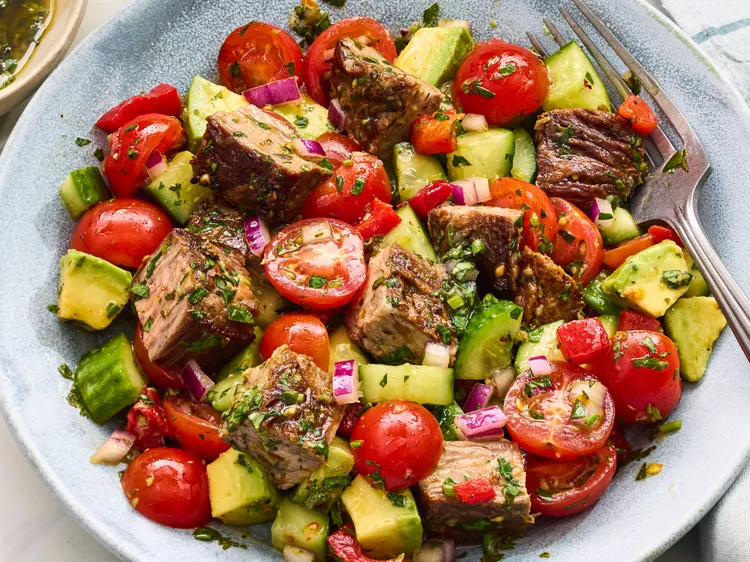
Chopped Chimichurri Steak Salad Recipe: The Ultimate High-Protein Meal
A masterful steak salad balances rich, savory protein with high-contrast brightness. Too often, restaurant versions fall short: the greens wilt under heavy dressings, or the steak lacks the deeply caramelized crust needed to anchor a bowl of raw vegetables. This chopped chimichurri steak salad recipe resolves those culinary shortcomings by employing a dual-purpose herbed sauce that serves as both a high-impact marinade and a vibrant, acid-forward dressing.
By selecting a well-marbled cut of beef like flank or skirt steak, quickly searing it over intense heat, and tossing it with structured, uniformly chopped greens, you create a texturally engaging meal. It feels substantive enough for a weekend dinner yet keeps the clean, refreshing profile of an ideal weekday lunch.
Why This Chopped Steak Salad Recipe Works
The secret to this recipe’s success lies in its efficiency and flavor balance. Traditional steak salads separate the components, leaving you with a dry strip of beef and a puddle of generic vinaigrette at the bottom of the bowl. This formula optimizes every layer:
-
The Multi-Tasking Chimichurri: Instead of making separate marinades and dressings, a single batch of handcrafted chimichurri does all the heavy lifting. Half coats the steak to tenderize the muscle fibers with red wine vinegar, while the remaining half is whisked with a touch more olive oil to dress the chopped vegetables.
-
Uniform “Chopped” Geometry: Cutting the greens, crisp cucumbers, creamy avocados, and blistered corn into uniform, bite-sized pieces ensures that every forkful carries a perfect distribution of textures—crunchy, creamy, and savory.
-
The Perfect Maillard Crust: Searing flank steak at $450^\circ\text{F}$ produces a deeply browned surface flavor that cuts beautifully through the high-acid, garlicky notes of the fresh herbs.
The Ingredients You Need
To achieve the bright, punchy flavors characteristic of high-end bistro cooking, prioritize fresh herbs and high-quality beef.
For the Dual-Purpose Chimichurri Sauce
-
Fresh Italian flat-leaf parsley: 1 cup, packed (do not use curly parsley, which has a bitter, grassy taste)
-
Fresh cilantro: 1/2 cup, packed (adds an earthy background note)
-
Garlic cloves: 4 medium, finely minced or grated
-
Red wine vinegar: 3 tablespoons (the crucial acid profile for tenderizing)
-
Red pepper flakes: 1/2 teaspoon (adjust for a subtle, warming heat)
-
Dried oregano: 1/2 teaspoon
-
Extra-virgin olive oil: 1/2 cup of high-quality, cold-pressed oil
-
Kosher salt and freshly cracked black pepper: To taste
For the Marinated Steak
-
Flank steak or Skirt steak: 1.5 pounds, trimmed of excess surface silver skin
-
Olive oil: 1 tablespoon (for lubricating the pan)
For the Chopped Salad Base
-
Romaine lettuce: 4 cups, chopped into 1/2-inch ribbons
-
Baby arugula: 2 cups, roughly chopped (adds a peppery bite)
-
Cherry tomatoes: 1 cup, halved or quartered
-
English cucumber: 1 cup, diced (peel left on for color and structural crunch)
-
Sweet corn kernels: 3/4 cup, fresh off the cob or thawed from frozen and charred
-
Red onion: 1/3 cup, finely diced
-
Hass avocado: 1 large, diced just before assembly to prevent oxidation
-
Cotija cheese or Feta cheese: 1/2 cup, crumbled (adds a salty, creamy finish)
Step-by-Step Instructions
Follow these chronological steps closely. Managing the internal temperature of the beef and allowing it to rest are non-negotiable for a tender result.
1. Blend the Chimichurri Sauce
Finely chop the fresh flat-leaf parsley and cilantro by hand. Avoid using a food processor, as spinning blades pulverize the herbs into a bitter, muddy paste rather than a clean, loose oil emulsion. In a medium glass bowl, combine the chopped parsley, cilantro, minced garlic, red wine vinegar, red pepper flakes, dried oregano, kosher salt, and black pepper. Whisk in the extra-virgin olive oil in a slow, steady stream. Taste and adjust the salt if necessary.
2. Marinate the Beef
Place your flank steak in a shallow baking dish or a resealable zip-top bag. Pour exactly half of the prepared chimichurri sauce over the steak, using your hands or tongs to ensure it is completely coated on both sides. Seal or cover the dish and let it marinate at room temperature for 30 minutes, or transfer it to the refrigerator for up to 4 hours. Keep the remaining half of the chimichurri covered at room temperature to use as the salad dressing.
3. Sear the Flank Steak
If refrigerated, remove the steak from the fridge 20 minutes before cooking to take the chill off. Heat a heavy cast-iron skillet or an outdoor grill over medium-high heat until it reads $450^\circ\text{F}$ or begins to faintly smoke. Lightly coat the skillet with one tablespoon of olive oil. Wipe away excess wet marinade from the steak to ensure a proper sear rather than steaming.
Lay the beef down into the hot pan. Cook undisturbed for 4 to 5 minutes per side. For a juicy medium-rare center, pull the steak off the heat when an instant-read digital meat thermometer inserts into the thickest part reads $130^\circ\text{F}$ to $135^\circ\text{F}$.
4. Rest and Slice the Protein
Transfer the seared steak to a clean cutting board. Tent it loosely with aluminum foil and let it rest for a full 8 to 10 minutes. This pause allows the constricted muscle fibers to relax and reabsorb their internal juices. After resting, use a sharp chef’s knife to slice the steak against the grain into thin strips, then chop those strips into bite-sized 1/2-inch pieces.
5. Assemble the Chopped Salad Base
In an exceptionally large mixing bowl, combine the chopped romaine lettuce, peppery arugula, halved cherry tomatoes, diced English cucumber, charred sweet corn, and finely diced red onion.
6. Dress and Serve
Whisk the reserved half of the chimichurri sauce vigorously to re-emulsify the oil and vinegar. Drizzle it over the chopped vegetable base and toss thoroughly until every leaf is lightly coated. Gently fold in the diced Hass avocado and crumbled cotija cheese. Divide the dressed salad among four wide serving bowls and top generously with the warm, chopped chimichurri steak pieces. Finish with an extra crack of fresh black pepper.
Expert Tips & Ingredient Substitutions
Experienced chefs rely on subtle adjustments to maximize both flavor profiles and dietary accessibility.
-
The “Against the Grain” Rule: Flank and skirt steak possess long, distinct muscle fibers. Slicing directly across these fibers cuts them short, guaranteeing a tender, easy chew. Slicing parallel to them makes the beef unpleasantly rubbery.
-
Substitutions for Beef: If you prefer alternative proteins, this recipe translates beautifully to boneless, skinless chicken thighs or peeled jumbo shrimp. Marinate chicken thighs for up to 6 hours and sear until they hit an internal temperature of $165^\circ\text{F}$.
-
Dairy-Free and Paleo Modifications: To make this recipe completely Paleo-compliant and dairy-free, simply omit the cotija or feta cheese. The creamy texture of the diced Hass avocado provides plenty of richness without needing dairy.
-
Acid Balancing: If your red wine vinegar is particularly sharp, balance the remaining chimichurri dressing by whisking in 1/2 teaspoon of pure honey or agave nectar before tossing it with the salad greens.
Preparation and Substitution Reference
| Original Component | Best Substitution | Culinary Purpose / Profile |
| Flank Steak | Skirt Steak or Top Sirloin | Maintains a rich beef flavor; easily handles high-heat searing. |
| Cotija Cheese | Feta or Queso Fresco | Adds a sharp, salty contrast to cut through the rich beef fat. |
| Red Wine Vinegar | Fresh Lime Juice | Offers a brighter, more citrus-forward acid profile. |
| Romaine Lettuce | Chopped Curly Kale | Provides a sturdier green leaf if meal-prepping in advance. |
Serving Suggestions
This steak salad is an entire, self-contained meal that balances macros elegantly on its own. However, if you are hosting a casual dinner party or looking to expand the spread, consider these excellent pairings:
-
Beverages: Pair the salad with a crisp, high-acid white wine like a New Zealand Sauvignon Blanc, or a medium-bodied, smoky red wine like an Argentine Malbec to match the chimichurri’s origins.
-
Starches: Serve alongside warm, grilled artisan sourdough bread brushed with olive oil, or a side of crispy, salted oven-roasted sweet potato wedges.
-
Presentation: Always use wide, shallow pasta bowls rather than deep mixing bowls to serve. This layout showcases the colorful contrast of the charred corn, red tomatoes, and emerald green chimichurri steak across the top.
Storage & Make-Ahead Notes
Because dressed greens wilt rapidly under acidic conditions, a few strategic rules apply to keeping leftovers fresh.
-
Refrigeration: Store the components separately. Keep the cooked chopped steak in an airtight container for up to 3 to 4 days. Store the undressed chopped salad vegetables in a separate container lined with a dry paper towel to absorb excess moisture.
-
The Chimichurri Shelf Life: Leftover dressing keeps perfectly in a sealed mason jar in the fridge for up to 7 days. The olive oil will solidify when cold; simply let the jar sit on the counter for 10 minutes at room temperature and shake vigorously before using.
-
Reheating Instructions: To prevent the medium-rare steak from turning gray and overcooked, do not microwave it on high power. Instead, let the steak pieces sit on the counter for 15 minutes to warm up slightly, or flash-sear them in a hot, dry skillet for 60 seconds just to release the fat before placing them over your cold greens.
Nutrition Information
Estimation based on one large serving (recipe yields 4 servings).
-
Calories: 540 kcal
-
Protein: 42 g
-
Fat: 36 g
-
Saturated Fat: 9 g
-
Carbohydrates: 14 g
-
Fiber: 4 g
-
Sugar: 5 g
-
Sodium: 680 mg