


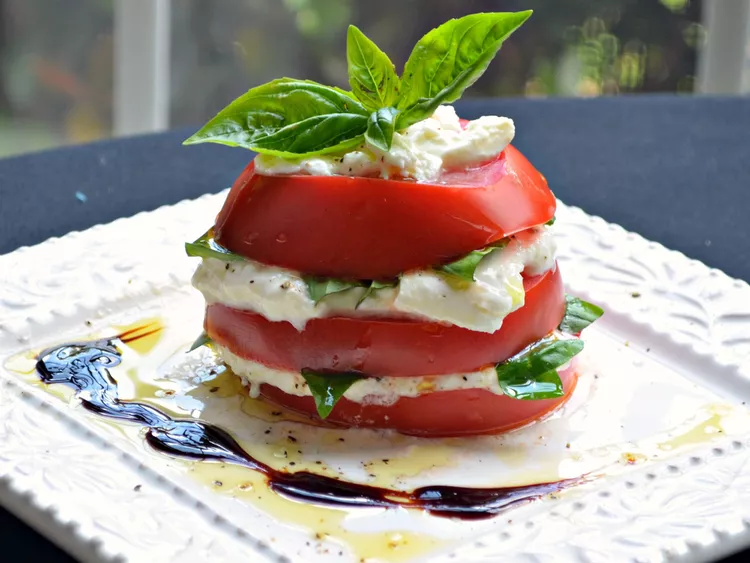
Stacked Tomato and Burrata Salad Recipe: A Fresh, Creamy Summer Favorite
Few summer dishes make such an impressive first impression with so little effort as a Stacked Tomato and Burrata Salad. Ripe, juicy tomatoes are layered into colorful stacks with luxuriously creamy burrata, fresh basil, extra-virgin olive oil, and a bright balsamic finish. The result is an elegant salad that celebrates peak-season produce without burying it beneath complicated flavors.
This tomato and burrata salad works because of contrast. The tomatoes are sweet, acidic, and refreshing, while burrata contributes a delicate milky richness. Basil brings an herbal freshness, and good olive oil ties everything together. A small amount of balsamic vinegar or glaze supplies just enough sweetness and acidity to sharpen the flavors.
Better still, the recipe requires no cooking. It can be assembled in about 15 minutes, making it ideal for summer dinners, garden parties, weekend lunches, or an impressive appetizer when entertaining.
Why You’ll Love This Stacked Tomato and Burrata Salad
A traditional tomato and burrata salad is already delicious, but stacking the ingredients gives the familiar combination a restaurant-worthy presentation.
The recipe is especially appealing because it is:
- Quick and easy: Preparation takes approximately 15 minutes.
- No-cook: Perfect for warm days when you do not want to turn on the oven.
- Fresh and seasonal: Peak-season tomatoes provide most of the flavor.
- Beautifully presented: Layered tomatoes create an elegant centerpiece.
- Naturally vegetarian: No meat is required.
- Easy to customize: Add peaches, pesto, arugula, prosciutto, or toasted nuts for different variations.
The key is using excellent ingredients. With such a short ingredient list, every component has an opportunity to stand out.
Ingredients
For the Tomato and Burrata Stacks
- 4 large ripe heirloom or beefsteak tomatoes
- 8 ounces burrata cheese, drained
- 1 cup fresh basil leaves
- 2 tablespoons extra-virgin olive oil
- 1 tablespoon balsamic vinegar or balsamic glaze
- 1/2 teaspoon kosher salt, plus more to taste
- 1/4 teaspoon freshly ground black pepper
Optional Garnishes
- 2 tablespoons toasted pine nuts
- 1 tablespoon finely chopped fresh chives
- Flaky sea salt
- Freshly ground black pepper
- Extra basil leaves
- Additional extra-virgin olive oil for drizzling
How to Make Stacked Tomato and Burrata Salad
1. Prepare the Tomatoes
Wash and thoroughly dry the tomatoes. Using a sharp serrated knife, slice them crosswise into rounds approximately 1/2 inch thick.
Try to keep the slices from each tomato together so they can be reconstructed into attractive stacks.
Place the tomato slices on a plate or clean kitchen towel. Sprinkle them lightly with kosher salt and allow them to stand for about 5 minutes.
This brief seasoning period draws out some of the tomatoes’ juices while intensifying their natural flavor.
2. Prepare the Burrata
Drain the burrata thoroughly and gently pat the exterior dry with a paper towel.
Tear or cut the burrata into portions suitable for layering between the tomato slices. Burrata has a soft mozzarella exterior surrounding a creamy center, so do not worry about creating perfectly uniform pieces.
Its loose, creamy texture is part of what makes this salad appealing.
For the best flavor, remove the burrata from the refrigerator approximately 15 to 20 minutes before serving. Slightly cool rather than refrigerator-cold cheese has a noticeably richer flavor and softer texture.
3. Build the Tomato Stacks
Place the largest tomato slices onto individual serving plates or a large platter.
Top each tomato round with a spoonful or torn piece of burrata. Add several fresh basil leaves.
Place another tomato slice on top and repeat with more burrata and basil. Finish each stack with a final tomato slice.
Depending on the size of your tomatoes, aim for two or three layers per stack. Avoid building them excessively high, as they can become difficult to serve and eat.
4. Season the Salad
Drizzle the tomato stacks evenly with 2 tablespoons extra-virgin olive oil.
Follow with the balsamic vinegar or balsamic glaze. Add freshly ground black pepper and a small pinch of flaky sea salt if desired.
When using balsamic glaze, apply it sparingly. Its concentrated sweetness can easily overpower delicate burrata and ripe tomatoes.
5. Garnish and Serve
Scatter additional basil leaves around the platter. Add toasted pine nuts or chopped chives if using.
Finish with another light drizzle of olive oil immediately before serving.
Serve the Stacked Tomato and Burrata Salad right away while the tomatoes are fresh and juicy and the burrata remains soft and creamy.
Expert Tips for the Best Tomato and Burrata Salad
Choose the Ripest Tomatoes
Tomatoes are the foundation of this recipe, so quality matters more than variety. Look for tomatoes that feel heavy for their size, smell fragrant around the stem, and yield slightly when gently pressed.
Heirloom tomatoes are particularly attractive because their different colors create dramatic stacks, but ripe beefsteak tomatoes work beautifully as well.
Avoid watery, underripe tomatoes whenever possible.
Use Room-Temperature Tomatoes
Never refrigerate ripe tomatoes specifically for this recipe unless necessary for preservation. Cold temperatures can mute their aroma and flavor.
Room-temperature tomatoes offer a sweeter, more fragrant result and contrast beautifully with slightly cool burrata.
Buy Fresh Burrata
Burrata should taste clean, milky, and delicately creamy. Because the cheese is served essentially unaltered, freshness makes a substantial difference.
Drain the cheese just before preparing the salad so excess liquid does not dilute the tomato juices and olive oil.
Use Good Extra-Virgin Olive Oil
This is an excellent occasion for flavorful extra-virgin olive oil. A fruity or slightly peppery oil complements the acidity of fresh tomatoes and the richness of burrata.
Season at the Right Time
Salt the tomatoes shortly before assembly rather than far in advance. Salt draws moisture from tomatoes, and excessive resting can leave the finished salad watery.
Delicious Variations
Tomato, Peach, and Burrata Salad
Add thin slices of ripe peaches or nectarines between the tomato layers. Their floral sweetness pairs especially well with basil and creamy burrata.
Pesto Burrata Tomato Stacks
Replace some of the plain olive oil with fresh basil pesto. Spoon a small amount between each tomato layer for a stronger herb flavor.
Arugula and Burrata Salad
Serve the tomato stacks over lightly dressed baby arugula. Its peppery flavor cuts through the richness of the cheese and turns the dish into a more substantial salad.
Prosciutto and Burrata Variation
For a non-vegetarian version, arrange thin ribbons of prosciutto around the tomato stacks. Its savory, salty character pairs naturally with creamy cheese and sweet tomatoes.
Gluten-Free Variation
The core recipe is naturally gluten-free. If serving bread alongside the salad, simply choose a certified gluten-free option when required.
Lighter Variation
Reduce the burrata to about 1 ounce per serving and increase the amount of tomatoes and fresh greens. You can also reduce the olive oil slightly while retaining enough to season the tomatoes properly.
What to Serve With Stacked Tomato and Burrata Salad
This fresh tomato burrata salad works equally well as an appetizer, side dish, or light lunch.
For a summer meal, serve it alongside grilled chicken, shrimp, salmon, or vegetables. The cool tomatoes and creamy cheese provide a refreshing contrast to smoky foods from the grill.
Crusty sourdough, ciabatta, or grilled country bread is another excellent accompaniment. Bread absorbs the mixture of tomato juices, burrata cream, olive oil, and balsamic that collects on the plate.
For an Italian-inspired menu, pair the salad with pasta tossed with garlic and olive oil, grilled vegetables, or a simple risotto.
If serving the salad as a light lunch, add arugula or mixed greens and toasted nuts for extra texture and substance.
How to Make It Look Restaurant-Worthy
The stacked presentation is one of the biggest advantages of this recipe.
Use tomatoes of similar diameter so the layers sit securely. If you have several heirloom varieties, alternate different colors for visual contrast.
Do not completely cover the tomatoes with burrata. Allow some of the red, yellow, orange, or green tomato flesh to remain visible.
Finish the platter only after the stacks are assembled. A few basil leaves, droplets of olive oil, cracked black pepper, and a restrained balsamic drizzle will look more refined than excessive garnishing.
A wide, shallow platter is particularly effective because it gives each stack enough space to stand out.
Make-Ahead Tips
This salad is best assembled shortly before serving, but several components can be prepared ahead.
The tomatoes can be washed and dried earlier in the day. Keep them whole at room temperature until you are ready to prepare the salad.
Basil can also be washed in advance, but it must be dried thoroughly before storage. Wrap it gently in a slightly damp paper towel and keep it protected until needed.
Keep burrata refrigerated in its original liquid until shortly before serving.
For the freshest texture, slice the tomatoes and assemble the salad no more than 15 to 30 minutes before serving.
Storage
Once assembled, Stacked Tomato and Burrata Salad is best eaten immediately.
If you have leftovers, transfer them to an airtight container and refrigerate promptly. Consume within 24 hours for the best quality.
The tomatoes will release additional moisture during refrigeration, while burrata gradually loses its delicate fresh texture. For that reason, the salad is considerably better freshly assembled than stored overnight.
Can You Freeze Tomato and Burrata Salad?
Freezing is not recommended.
Fresh tomatoes become soft and watery after thawing, while burrata’s creamy filling can separate and develop an undesirable texture. This dish should always be prepared fresh.
Nutrition Information
The following values are approximate and based on 1 serving, assuming the recipe makes four servings.
| Nutrient | Approximate Amount |
|---|---|
| Calories | 245 kcal |
| Protein | 9 g |
| Fat | 19 g |
| Saturated Fat | 8 g |
| Carbohydrates | 11 g |
| Fiber | 3 g |
| Sugar | 7 g |
| Sodium | 420 mg |
Exact nutritional values will vary depending on the size and variety of tomatoes, the specific burrata used, and the amount of oil and garnish served.
Frequently Asked Questions
What Is Burrata?
Burrata is a fresh Italian cheese with an outer shell similar to mozzarella and a soft center traditionally filled with stracciatella and cream. When opened, the center spills out into a rich, creamy filling that pairs exceptionally well with tomatoes.
Can I Substitute Fresh Mozzarella for Burrata?
Yes. Fresh mozzarella is the easiest substitute. It is firmer and less creamy than burrata but provides a similarly mild, milky flavor.
For the best results, use fresh mozzarella packed in liquid rather than low-moisture mozzarella intended for pizza.
Should Burrata Be Served Cold?
Burrata should remain safely refrigerated during storage, but its flavor and texture are best when it is not ice-cold. Remove it from the refrigerator roughly 15 to 20 minutes before serving, then assemble and serve promptly.
What Tomatoes Are Best for Burrata Salad?
Ripe heirloom and beefsteak tomatoes are ideal because their large diameter makes them easy to stack. Smaller tomatoes can also be used, although they are better suited to a traditional platter-style burrata salad rather than vertical stacks.
Can I Make This Salad Ahead?
You can prepare the individual ingredients in advance, but final assembly should happen close to serving time. Tomatoes release juice after slicing and salting, so assembling too early can make the salad watery.
Final Thoughts
A Stacked Tomato and Burrata Salad proves that an impressive dish does not need a long ingredient list or complicated technique. When ripe summer tomatoes meet creamy burrata, fragrant basil, fruity extra-virgin olive oil, and a touch of balsamic, very little else is required.
The stacked presentation elevates these familiar ingredients into a striking appetizer or side dish while keeping the recipe remarkably easy to prepare. Serve it at a summer dinner party, alongside grilled food, or with crusty bread for a relaxed lunch.
Above all, make this salad when tomatoes are at their sweetest. With fresh ingredients and restrained seasoning, this simple tomato and burrata salad recipe delivers the bright, creamy, juicy flavors that define summer cooking.