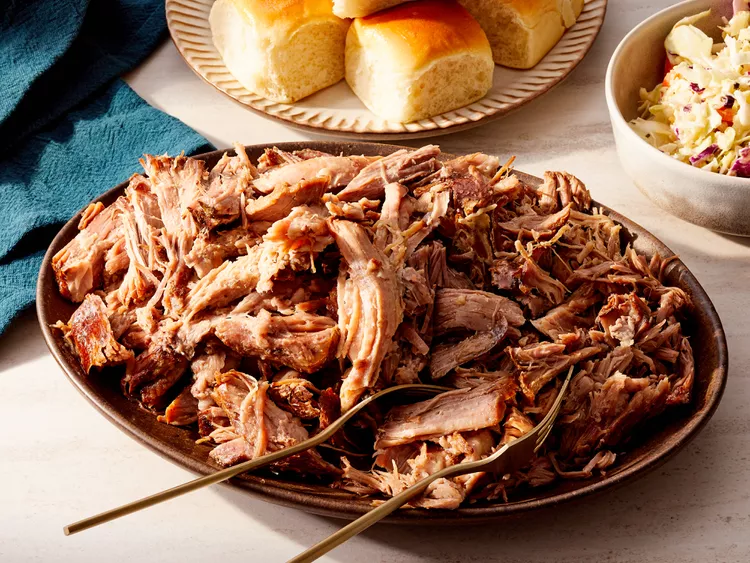
Kalua Pig in a Slow Cooker Recipe: Tender Hawaiian-Style Pulled Pork
Few recipes demonstrate the power of slow cooking as effectively as Kalua Pig in a Slow Cooker. With only a handful of ingredients and minimal preparation, a large pork roast transforms into exceptionally tender, smoky meat that practically falls apart when touched with a fork.
Traditional Hawaiian kālua pig is associated with cooking pork in an underground oven called an imu, where the meat slowly roasts and steams until succulent. A home slow cooker cannot reproduce an imu exactly, but it offers a convenient way to capture the dish’s defining qualities: deeply savory pork, gentle smokiness, plenty of moisture, and a soft, shreddable texture.
This slow cooker Kalua pork recipe uses pork shoulder, Hawaiian-style sea salt, liquid smoke, and optional cabbage. The long, gentle cooking time allows the pork’s connective tissue to break down while the rendered fat and natural juices create a rich cooking liquid.
The result is an easy Hawaiian-inspired dinner that’s equally suited to family meals, meal prep, sandwiches, rice bowls, and casual gatherings.
Why This Slow Cooker Kalua Pig Recipe Works
Pork shoulder is particularly well suited to slow cooking because it contains enough fat and connective tissue to remain moist during an extended cooking period. Rather than becoming dry, the meat grows increasingly tender as collagen converts to gelatin.
There is also no need to add cups of broth or water. Pork shoulder releases substantial liquid as it cooks, creating its own flavorful braising environment.
Liquid smoke provides the subtle smoky quality associated with traditional cooking methods, while coarse salt seasons the meat throughout. Keeping the ingredient list restrained is important: Kalua-style pork should taste primarily of rich, succulent pork rather than a complicated spice blend.
Prep time: 10 minutes
Cook time: 8–10 hours on Low
Total time: About 8 hours 10 minutes
Servings: 8
Ingredients
For the Kalua Pig
- 4 pounds boneless pork shoulder or pork butt
- 1 tablespoon coarse Hawaiian sea salt or coarse kosher salt
- 1 tablespoon liquid smoke, preferably hickory
- 1/2 cup water, optional, depending on your slow cooker
Optional Cabbage
- 1 small green cabbage, about 1 1/2 pounds, cut into large wedges
- 1/4 teaspoon coarse salt, or to taste
For Serving
- Steamed white rice
- Sliced green onions, optional
- Pineapple or fresh fruit, optional
How to Make Kalua Pig in a Slow Cooker
1. Prepare the Pork
Pat the pork shoulder dry with paper towels. If there is an exceptionally thick exterior layer of fat, trim some of it away, but leave a moderate amount intact. That fat contributes flavor and helps keep the pork succulent during its long cooking time.
Using the tip of a small knife or a fork, make several shallow punctures across the surface of the pork. These openings help the seasoning reach slightly deeper into the roast.
2. Season the Pork
Rub the pork evenly with the coarse sea salt, making sure to season every side.
Drizzle the liquid smoke over the pork and rub it across the surface. Liquid smoke is concentrated, so a relatively small quantity is sufficient. Adding too much can overwhelm the natural flavor of the meat.
3. Transfer to the Slow Cooker
Place the seasoned pork in a 6-quart slow cooker with the fattier side facing upward.
Most pork shoulders release enough moisture that additional cooking liquid is unnecessary. If your slow cooker tends to run particularly hot or the pork is unusually lean, add up to 1/2 cup water around the meat.
Cover the slow cooker securely.
4. Cook Low and Slow
Cook the pork on Low for 8–10 hours, or until it is exceptionally tender.
For food safety, whole cuts of pork are safe at lower internal temperatures, but pulled pork needs substantially more cooking for the desired texture. For easy shredding, pork shoulder generally reaches its best texture around 195–205°F internally.
The most useful test is tenderness: a fork should slide into the meat with very little resistance, and the pork should pull apart effortlessly.
Avoid repeatedly opening the slow cooker during cooking because lifting the lid releases heat and steam.
5. Shred the Pork
Carefully transfer the cooked pork to a large cutting board or shallow dish. Let it rest for about 10 minutes.
Use two forks to pull the pork into bite-size shreds, discarding any large pieces of unrendered fat.
Do not immediately discard the liquid remaining in the slow cooker. It contains concentrated pork flavor and can be used to keep the shredded meat moist.
6. Season With the Cooking Juices
Allow the cooking liquid to settle briefly, then skim away excess surface fat if desired.
Return the shredded pork to the slow cooker and add enough of the cooking juices to make it juicy without becoming soupy. Toss gently and taste before adding any additional salt.
Keep the pork covered on the Warm setting until ready to serve.
How to Add Cabbage
Kalua pork and cabbage is a particularly satisfying combination because the mild vegetable absorbs some of the pork’s smoky, savory cooking juices.
Once the pork has finished cooking, remove it from the slow cooker and shred it as directed.
Place the cabbage wedges into the hot cooking liquid. Cover and cook on High for approximately 20–30 minutes, or until the cabbage is tender but still holds its shape.
Alternatively, cut the cabbage into thick pieces and add it during the final 45–60 minutes of the pork’s cooking time.
Taste before adding extra salt because the pork juices are already seasoned.
Expert Tips for the Best Slow Cooker Kalua Pork
Choose Pork Shoulder Instead of Pork Loin
Pork shoulder, sometimes labeled pork butt or Boston butt, contains significantly more connective tissue and intramuscular fat than pork loin. These qualities make it ideal for long, slow cooking.
Pork loin is much leaner and can become dry before developing the same shreddable consistency.
Cook on Low When Possible
Although pork shoulder can be cooked on High when time is limited, the Low setting produces more consistent results. Eight to ten hours of gentle cooking gives the connective tissue plenty of time to soften.
Be Conservative With Salt
The cooking juices become concentrated during the long cooking process. Start with the recommended quantity and adjust only after the pork has been shredded.
If substituting fine table salt for coarse salt, use considerably less by volume.
Don’t Overdo the Liquid Smoke
Liquid smoke should provide a background note rather than dominate the finished dish. Approximately 1 tablespoon for a 4-pound pork shoulder produces noticeable but balanced smokiness.
Save the Cooking Liquid
The rendered juices are one of the most valuable parts of the recipe. After removing excess fat, stir some liquid back into the shredded pork before serving or refrigerating.
This also helps prevent leftovers from drying out during reheating.
Kalua Pig Variations
Kalua Pork With Cabbage
Add green cabbage toward the end of cooking for a simple one-pot meal. The cabbage becomes tender while absorbing the smoky pork juices.
Banana Leaf Variation
If banana leaves are readily available, rinse them thoroughly and use them to line the slow cooker before adding the pork. Fold the leaves over the top of the meat before covering.
They provide an aromatic element that brings the slow-cooker preparation slightly closer to the character of traditional island cooking.
Lower-Sodium Kalua Pork
Reduce the coarse salt to approximately 2 teaspoons. Season the shredded pork to taste after cooking rather than heavily salting the raw roast.
Gluten-Free Variation
The basic ingredients in this recipe can readily fit a gluten-free diet, but check the label on the specific liquid smoke product you purchase if avoiding gluten strictly.
What to Serve With Kalua Pig
Steamed white rice is one of the simplest and most effective accompaniments. The rice absorbs the pork’s flavorful juices and balances its richness without competing with its smoky character.
For a more complete Hawaiian-inspired plate, serve the pork with steamed rice and creamy macaroni salad. The cool, rich salad contrasts pleasantly with the warm, savory meat.
Cooked cabbage is another excellent choice, particularly when prepared directly in the pork juices.
For something brighter, add fresh pineapple, mango, cucumber salad, or a crisp cabbage slaw. Their acidity and freshness help cut through the richness of pork shoulder.
Kalua pork also works particularly well in sandwiches and sliders. Pile the warm shredded meat onto soft rolls and pair it with cabbage slaw or pickled vegetables for extra crunch.
Make-Ahead Instructions
Kalua pig is an excellent make-ahead recipe because the shredded meat retains moisture particularly well when stored with some of its cooking juices.
Prepare the pork completely, shred it, and allow it to cool slightly. Transfer it to an airtight container with enough cooking liquid to keep the meat moist.
Refrigerate until needed.
When reheated the following day, the pork often tastes even more integrated because the smoky, salty cooking juices have had additional time to season the shredded meat.
Storage and Reheating
Refrigerator
Store cooked Kalua pork in an airtight container in the refrigerator for 3–4 days. Keep some of the cooking juices with the meat to prevent it from drying out.
Freezer
Kalua pork freezes well for approximately 2–3 months for best quality.
Divide the shredded pork into meal-size portions and add a small amount of cooking liquid to each container or freezer bag. Remove excess air before sealing.
Thaw frozen pork overnight in the refrigerator before reheating.
Reheating
For small portions, place the pork in a covered microwave-safe dish with a spoonful of cooking liquid or water and heat until steaming hot throughout.
For larger portions, place the pork in a covered baking dish with a little reserved juice and warm in a 325°F oven for about 20–30 minutes, depending on quantity.
You can also reheat it gently in a covered skillet over medium-low heat.
Nutrition Information
The following values are approximate and based on one serving of pork, assuming 8 servings, without rice, cabbage, or additional side dishes.
| Nutrient | Amount Per Serving |
|---|---|
| Calories | 390 |
| Protein | 36 g |
| Fat | 26 g |
| Saturated Fat | 9 g |
| Carbohydrates | 1 g |
| Fiber | 0 g |
| Sugar | 0 g |
| Sodium | 720 mg |
Actual nutrition will vary according to the pork shoulder’s fat content, the amount of rendered fat discarded, the type of salt used, and serving size.
Frequently Asked Questions
What Is Kalua Pig?
Kalua pig, or kālua pork, is associated with a traditional Hawaiian cooking method in which food is cooked in an underground oven known as an imu. The slow cooker version is a convenient home adaptation designed to produce similarly tender, smoky pork without requiring traditional underground cooking.
What Cut of Pork Is Best for Slow Cooker Kalua Pig?
Pork shoulder is the best choice. Look for pork butt, Boston butt, or another well-marbled shoulder cut. Its combination of fat and connective tissue makes it particularly suitable for slow cooking and shredding.
Can You Make Kalua Pig Without Liquid Smoke?
Yes. The pork will still become tender and flavorful, although it will lack the characteristic smoky element of this slow-cooker adaptation.
If available, banana leaves can add another aromatic dimension, but they do not provide the same smoke flavor.
Do You Need to Add Water to Slow Cooker Kalua Pork?
Usually, no. Pork shoulder naturally releases a considerable amount of liquid and fat as it cooks. A small amount of water can be added if your slow cooker runs hot, but the meat should not be submerged.
How Do You Know When Kalua Pork Is Done?
The pork is ready when it can be pulled apart easily with a fork. For the soft texture expected of pulled pork, the internal temperature commonly reaches approximately 195–205°F.
Tenderness is ultimately more important than hitting one exact number.
Final Thoughts
This Kalua Pig in a Slow Cooker recipe proves that a remarkably flavorful dinner does not require a complicated ingredient list. Pork shoulder, coarse salt, liquid smoke, and patient low-temperature cooking are enough to create juicy meat with a rich, smoky character and fork-tender texture.
Serve your slow cooker Kalua pork traditionally with steamed rice and cabbage, turn it into sandwiches and sliders, or portion it into containers for easy meals throughout the week. Because it reheats and freezes exceptionally well, it is also a practical recipe for entertaining and make-ahead cooking.
Simple preparation, long gentle cooking, and the right cut of pork are the keys. Give the pork enough time to become completely tender, mix the shredded meat with its flavorful juices, and you will have an easy Hawaiian-inspired pork dish worthy of becoming a regular slow-cooker favorite.