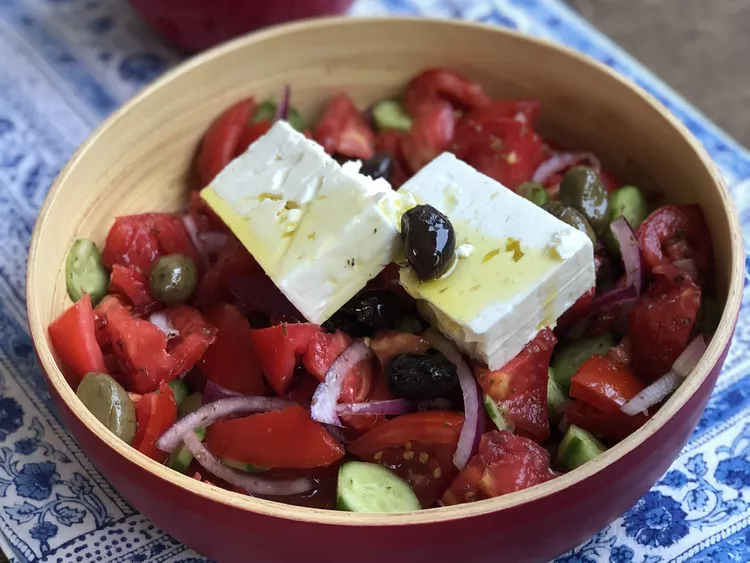
Greek Horiatiki Salad Recipe: Authentic, Fresh and Easy Village Salad
Few dishes capture the bright, sun-soaked flavors of Mediterranean cooking quite like an authentic Greek Horiatiki Salad. Made with ripe tomatoes, crisp cucumber, sweet bell pepper, red onion, briny olives, creamy feta cheese, extra-virgin olive oil, and dried oregano, this traditional Greek village salad proves that simple ingredients can create exceptional flavor.
Unlike many restaurant-style Greek salads, a traditional Horiatiki salad recipe does not rely on lettuce or a heavy prepared dressing. Instead, juicy vegetables release their natural juices into good olive oil, creating a light, savory dressing directly in the bowl. A generous slab of feta placed on top gives the salad its unmistakable Greek character.
This easy Greek salad is ideal for summer lunches, Mediterranean dinners, cookouts, and meals where you want something refreshing alongside grilled meat, seafood, or warm bread. It requires very little preparation and no cooking, making it especially useful when tomatoes are at their seasonal best.
What Is Greek Horiatiki Salad?
Horiatiki, often translated as Greek village salad or country salad, is one of Greece’s best-known traditional dishes. Its appeal comes from the contrast between juicy, crisp, creamy, salty, and herbaceous ingredients.
The vegetables are typically cut into substantial pieces rather than finely chopped. Tomatoes provide sweetness and acidity, cucumber adds crunch, onion contributes sharpness, and olives bring a salty, fruity depth.
Feta is traditionally served as a slab or thick piece over the vegetables rather than crumbled throughout the salad. Olive oil and oregano finish the dish, while vinegar may be added for extra acidity.
The result is rustic rather than elaborate—and that simplicity is exactly what makes a good Horiatiki memorable.
Why This Greek Horiatiki Salad Recipe Works
The success of Horiatiki depends more on ingredient quality and proper preparation than complicated technique.
Salting the tomatoes and vegetables lightly encourages them to release some of their juices. When those juices combine with extra-virgin olive oil and red wine vinegar, they create a naturally flavorful dressing.
Keeping the vegetables in larger pieces also preserves their individual textures. Meanwhile, placing the feta on top prevents it from disappearing into the salad and allows diners to break off creamy pieces as they eat.
The final touch of dried oregano reinforces the Mediterranean character without overpowering the fresh vegetables.
Greek Horiatiki Salad Ingredients
Servings: 4
Prep time: 15 minutes
Resting time: 5–10 minutes
Total time: About 20 minutes
For the Salad
- 4 medium ripe tomatoes, cut into wedges or large chunks
- 1 large cucumber, partially peeled and cut into thick half-moons
- 1 small green bell pepper, seeded and thinly sliced into rings
- 1/2 medium red onion, thinly sliced
- 3/4 cup Kalamata olives, drained
- 6 ounces Greek feta cheese, preferably in one thick slab
- 1 tablespoon capers, drained, optional
For the Dressing
- 1/4 cup extra-virgin olive oil
- 1 tablespoon red wine vinegar
- 1 teaspoon dried Greek oregano, plus more for finishing
- 1/4 teaspoon kosher salt, or to taste
- Freshly ground black pepper, to taste
How to Make Greek Horiatiki Salad
1. Prepare the Tomatoes
Cut the tomatoes into generous wedges or irregular chunks and place them in a large, shallow serving bowl.
Choose tomatoes that are fully ripe but still firm enough to hold their shape. The tomato juices become an important part of the dressing, so flavorful seasonal tomatoes make a noticeable difference.
2. Cut the Cucumber
Partially peel the cucumber, leaving alternating strips of skin for color and texture. Slice it lengthwise if necessary, then cut it into thick half-moons.
Add the cucumber to the tomatoes.
If using a large cucumber with particularly watery seeds, you can scoop out some of the seed cavity before slicing. Smaller Persian or Mediterranean cucumbers generally do not require this step.
3. Add the Pepper and Onion
Add the sliced green bell pepper and red onion to the bowl.
Traditional Horiatiki often includes green pepper for its distinctive grassy flavor and crunch. Slice the onion thinly so its sharpness complements rather than dominates the tomatoes.
For a milder onion flavor, soak the slices in cold water for about 10 minutes, then drain and dry thoroughly before adding them.
4. Add the Olives
Scatter the Kalamata olives and optional capers over the vegetables.
Whole olives with pits tend to retain excellent texture and flavor, but pitted olives make the finished salad easier to eat.
5. Season the Vegetables
Sprinkle the vegetables with kosher salt, black pepper, and about half of the dried oregano.
Toss gently and allow the mixture to stand for 5 minutes. This brief resting period draws a small amount of juice from the tomatoes and helps create the characteristic dressing at the bottom of the bowl.
6. Dress the Horiatiki
Pour the red wine vinegar and extra-virgin olive oil over the vegetables.
Gently toss again until everything is lightly coated. Avoid aggressive mixing, which can crush ripe tomatoes and make the salad unnecessarily watery.
Taste before adding additional salt because both the olives and feta are naturally salty.
7. Add the Feta
Place the feta slab directly over the dressed vegetables.
Drizzle it with a little olive oil and sprinkle the remaining oregano over the top. Add another grinding of black pepper if desired.
Serve immediately or allow the salad to stand for another 5 minutes so the flavors can mingle.
Expert Tips for the Best Authentic Horiatiki
Use the Ripest Tomatoes Available
Tomatoes form the foundation of this recipe. Look for ripe tomatoes with a fragrant aroma, vibrant color, and a juicy interior. During peak summer, heirloom or vine-ripened tomatoes are particularly good choices.
Choose Greek Feta
For the most traditional flavor, use Greek feta made primarily from sheep’s milk or a combination of sheep’s and goat’s milk. It generally has a tangy, savory flavor and creamy but pleasantly crumbly texture.
Feta stored in brine usually has better moisture and texture than pre-crumbled cheese.
Use Good Extra-Virgin Olive Oil
Because the olive oil is not cooked, its flavor remains prominent. A fruity, peppery extra-virgin olive oil complements the tomatoes, feta, and oregano particularly well.
Keep the Vegetables Rustic
Horiatiki should not resemble a finely chopped salsa. Larger tomato wedges and substantial cucumber pieces provide better texture and give the salad its characteristic rustic appearance.
Do Not Over-Salt
Olives, capers, and feta can all contribute substantial sodium. Season the vegetables modestly at first, then adjust after the feta has been added.
Let the Tomato Juices Become the Dressing
Do not discard the liquid that collects at the bottom of the bowl. The combination of tomato juice, vinegar, olive oil, oregano, and feta is one of the best parts of Horiatiki.
Serve the salad with crusty bread or warm pita for soaking it up.
Horiatiki Salad Variations and Substitutions
Traditional Horiatiki is intentionally simple, but a few practical substitutions can work while preserving its overall character.
| Ingredient | Recommended Substitute |
|---|---|
| Kalamata olives | Another good-quality Greek black olive |
| Red onion | Thinly sliced yellow or sweet onion |
| Large cucumber | Persian cucumbers |
| Red wine vinegar | White wine vinegar |
| Greek feta | High-quality sheep’s milk feta |
| Green bell pepper | Cubanelle or another mild green pepper |
Vegetarian Horiatiki Salad
The standard recipe is naturally vegetarian.
Gluten-Free Greek Salad
Horiatiki itself is naturally gluten-free when prepared with gluten-free individual ingredients. If serving it with bread, choose an appropriate gluten-free loaf or flatbread.
Dairy-Free Variation
For a dairy-free version, omit the feta. Although this moves the dish away from traditional Horiatiki, extra olives and capers can help replace some of the salty intensity.
Lighter Horiatiki Salad
Reduce the olive oil to 2 tablespoons and use about 4 ounces of feta. The vegetables will still provide enough juice to create a flavorful dressing.
What to Serve With Greek Horiatiki Salad
Greek Horiatiki salad is versatile enough to work as an appetizer, side dish, or light lunch.
Serve it alongside grilled chicken souvlaki, lamb kebabs, grilled fish, roasted shrimp, or simple grilled steak. The salad’s acidity and crisp vegetables provide an excellent contrast to smoky, rich proteins.
For a vegetarian Mediterranean meal, pair Horiatiki with roasted chickpeas, stuffed grape leaves, grilled vegetables, hummus, or a simple bean dish.
Warm pita or rustic crusty bread is especially useful because it absorbs the tomato-and-olive-oil dressing left in the bowl.
For summer entertaining, serve the salad with grilled seafood, lemon-roasted potatoes, and chilled sparkling water with citrus.
Can You Make Horiatiki Salad Ahead?
Horiatiki tastes best shortly after it is assembled because tomatoes and cucumbers gradually release moisture after being salted.
For advance preparation, cut the cucumber, bell pepper, and onion several hours ahead and refrigerate them separately in airtight containers. Tomatoes are best cut closer to serving time for optimal texture.
The olive oil, vinegar, and oregano can also be combined ahead.
Assemble and season the salad approximately 10–15 minutes before serving.
Storage and Leftovers
Store leftover Greek Horiatiki salad in an airtight container in the refrigerator for up to 2 days.
The vegetables will soften and release additional liquid during refrigeration, so the texture will not be as crisp as freshly prepared salad. However, the flavor remains enjoyable.
Horiatiki is best served cool or allowed to sit at room temperature for about 10–15 minutes before eating. Very cold temperatures can mute the flavor of tomatoes and olive oil.
Freezing is not recommended. Tomatoes and cucumbers contain large amounts of water and develop a soft, watery texture after freezing and thawing.
Nutrition Information
Approximate nutrition per serving, based on 4 servings:
- Calories: 330
- Protein: 9 g
- Fat: 28 g
- Saturated Fat: 8 g
- Carbohydrates: 14 g
- Fiber: 4 g
- Sugar: 8 g
- Sodium: 820 mg
Nutrition values are estimates and can vary depending on the feta, olives, amount of salt, and exact quantities of olive oil used.
Frequently Asked Questions
Does authentic Greek Horiatiki contain lettuce?
Traditional Horiatiki is generally prepared without lettuce. Its foundation is tomatoes, cucumber, green pepper, onion, olives, feta, olive oil, and oregano.
This distinguishes Greek village salad from many international restaurant-style Greek salads that use lettuce as their base.
Is feta crumbled in traditional Horiatiki?
Feta is commonly placed over the salad as a thick slab or large piece. Diners can then break pieces off while eating. Crumbled feta is convenient but produces a somewhat different presentation and texture.
What olives are best for Greek salad?
Kalamata olives are an excellent choice because their fruity, slightly bitter and briny flavor complements tomatoes and feta particularly well.
Should you peel cucumber for Horiatiki?
You do not have to peel it completely. Partially peeling the cucumber removes some tougher skin while preserving color and crunch.
Does Greek salad need lemon juice?
Lemon is not necessary. Red wine vinegar supplies enough acidity in this version, while the tomatoes contribute their own natural brightness.
How long should Horiatiki sit before serving?
About 5–10 minutes after seasoning is enough to encourage the vegetables to release flavorful juices without becoming overly soft.
Final Thoughts
An authentic Greek Horiatiki Salad recipe is a reminder that excellent food does not need to be complicated. Ripe tomatoes, crisp cucumber, green pepper, red onion, Kalamata olives, feta, oregano, vinegar, and quality extra-virgin olive oil create a salad with remarkable depth despite its short ingredient list.
The key is to respect those ingredients: keep the vegetables generously cut, season them carefully, use feta with good flavor and texture, and allow the tomato juices to mingle with the olive oil at the bottom of the bowl.
Whether served beside grilled chicken, seafood, lamb, or simply with warm bread, this traditional Greek village salad delivers the fresh, salty, tangy flavors that make Mediterranean cooking so appealing. It is quick enough for a weekday lunch but attractive and flavorful enough for a summer dinner table.