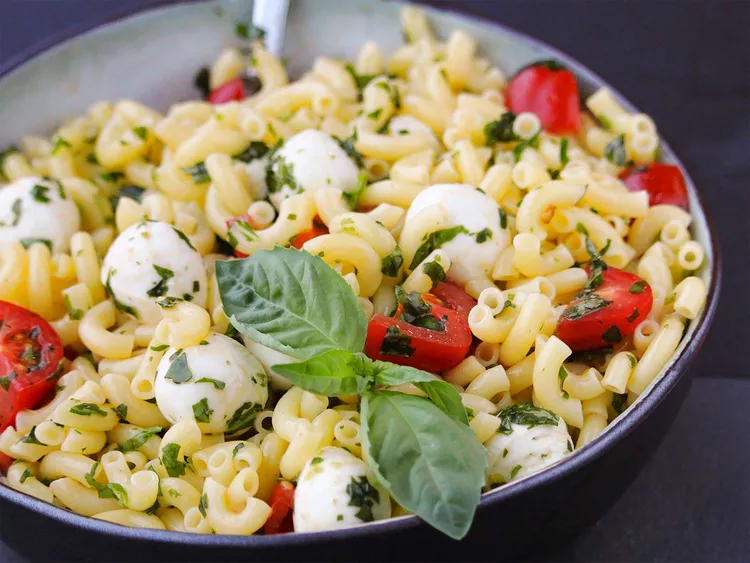
The Ultimate Pesto Pasta Caprese Salad: A Vibrant Summer Classic
Summer entertaining calls for dishes that are effortless, vibrant, and capable of sitting out on a buffet table without losing their charm. This Pesto Pasta Caprese Salad is the definitive answer. By marrying the herbaceous punch of a classic Genoese basil pesto with the clean, milky flavors of a traditional Italian Caprese, this pasta salad elevates a simple side dish into the star of the table.
What makes this recipe work so beautifully is the strategic interplay of textures and temperatures. The ridges of the radiatori pasta catch the vibrant green sauce, while the juicy, acidic burst of ripe cherry tomatoes cuts through the richness of the pine nuts and extra virgin olive oil. Creamy bocconcini (fresh mozzarella pearls) add a luxurious chew, and a final drizzle of thick, syrupy balsamic glaze creates a sharp, sweet contrast that brings the entire dish into perfect balance.
Whether you are hosting a backyard barbecue, packing a gourmet picnic, or looking for a high-yield meal prep option for busy weeknights, this dish delivers maximum culinary impact with minimal kitchen time.
The Anatomy of the Perfect Pasta Salad
To ensure your pasta salad stands out from standard potluck fare, every component must be handled with culinary intent.
-
The Pasta Shape: Skip the standard elbows. Shapes with deep ridges, pockets, or spirals—such as radiatori, fusilli, or cavatappi—are essential. They act as structural vehicles, trapping the pesto and ensuring that every bite is thoroughly coated.
-
The Pesto Baseline: While store-bought pesto works in a pinch, a quick, homemade emulsion made from fresh sweet basil, toasted pine nuts, garlic, Parmigiano-Reggiano, and high-quality extra virgin olive oil transforms this dish from good to spectacular.
-
The Tomato Treatment: Rather than slicing large tomatoes, which bleed excess water and make the salad soggy, use whole or halved cherry or grape tomatoes. They retain their structural integrity and offer a concentrated, sweet burst of acidity.
Ingredients
For the Homemade Basil Pesto
-
Fresh basil leaves: 2 cups, packed tightly (stems removed)
-
Pine nuts: $1/3$ cup, lightly toasted
-
Garlic cloves: 2 medium, peeled and roughly chopped
-
Parmigiano-Reggiano cheese: $1/2$ cup, freshly grated
-
Extra virgin olive oil: $1/2$ cup, cold-pressed and high-quality
-
Kosher salt: $1/2$ teaspoon (adjust to taste)
-
Freshly cracked black pepper: $1/4$ teaspoon
For the Pasta Salad Assembly
-
Dried radiatori or fusilli pasta: 1 pound (16 ounces)
-
Cherry tomatoes: 2 cups, halved longitudinally
-
Bocconcini (fresh mozzarella pearls): 8 ounces, drained
-
Fresh baby arugula: 1 cup, loosely packed (optional, for pepperiness)
-
Toasted pine nuts: 2 tablespoons (reserved for garnish)
-
Fresh basil leaves: $1/4$ cup, chiffonade (cut into thin ribbons, for garnish)
-
Aged balsamic glaze: 2 tablespoons, for drizzling before serving
Step-by-Step Instructions
Step 1: Toast the Pine Nuts
Place a dry, heavy-bottomed skillet over medium-low heat. Add the $1/3$ cup of pine nuts for the pesto and the 2 tablespoons for the garnish. Cook, stirring constantly, for 3 to 5 minutes until the nuts turn a pale golden brown and release a fragrant, nutty aroma. Immediately transfer them to a small bowl to stop the cooking process; pine nuts contain high amounts of oil and can burn within seconds if left in a hot pan.
Step 2: Blitz the Fresh Pesto
In the bowl of a food processor, combine the toasted basil leaves, $1/3$ cup of toasted pine nuts, chopped garlic, kosher salt, and black pepper. Pulse 10 to 12 times until the ingredients are coarsely chopped. Add the freshly grated Parmigiano-Reggiano.
With the food processor running on low speed, slowly drizzle the extra virgin olive oil through the feed tube in a steady stream. Continue blending until a smooth, vibrant green emulsion forms. Taste and add more salt if necessary. Transfer the pesto to a small bowl, press a piece of plastic wrap directly onto the surface to prevent oxidation (browning), and set aside.
Step 3: Cook the Pasta to True Al Dente
Bring a large pot of heavily salted water (roughly 1 tablespoon of kosher salt per 4 quarts of water) to a rolling boil. Add the pound of pasta and stir immediately to prevent the shapes from sticking to the bottom.
Cook according to package instructions, but check the doneness 2 minutes before the suggested time. The pasta must be cooked al dente—meaning it retains a firm, distinct bite in the center.
Chef’s Note: Pasta softens as it absorbs the sauce and sits in the refrigerator. Cooking it past al dente at this stage guarantees a mushy salad later.
Step 4: Cool and Prep the Pasta
Drain the pasta into a large colander. Do not rinse the pasta under cold water; the natural starches coating the outside of the hot pasta help the pesto adhere to it. Instead, spread the hot pasta out on a large rimmed baking sheet in a single layer. Drizzle with 1 teaspoon of olive oil to prevent sticking, and let it cool completely to room temperature (about 15 to 20 minutes).
Step 5: Toss and Assemble
In a large mixing bowl, combine the cooled room-temperature pasta, the prepared basil pesto, the halved cherry tomatoes, and the drained bocconcini pearls.
Using a large rubber spatula, gently fold the ingredients together from the bottom up until every ridge of the pasta is thoroughly coated in pesto. If using baby arugula for an earthy balance, fold it in gently during the last few turns.
[ Mixing Bowl Components ]
  ├── Cooled Radiatori Pasta (Traps sauce)
  ├── Emulsified Basil Pesto (Coats thoroughly)
  ├── Halved Cherry Tomatoes (Adds bright acidity)
  └── Mozzarella Bocconcini (Provides creamy chew)
Step 6: Garnish and Serve
Transfer the salad to a wide, shallow serving bowl. Just before serving, scatter the remaining 2 tablespoons of toasted pine nuts and the fresh basil chiffonade across the top. Finish with an artistic drizzle of the thick, aged balsamic glaze for a professional culinary presentation.
Expert Tips & Variations
Ingredient Substitutions and Swaps
To keep this recipe dynamic and adaptable for various dietary restrictions, consider the following calculated modifications:
| Original Ingredient | Dietary/Preference Alternative | Culinary Impact |
| Pine Nuts | Toasted Walnuts or Pepitas (Pumpkin Seeds) | Walnuts add a rustic, earthy depth; pepitas offer a completely nut-free alternative. |
| Bocconcini (Mozzarella) | Vegan Mozzarella Pearls or Marinated Tofu Cubes | Keeps the signature milky texture while making the entire dish plant-based. |
| Radiatori Pasta | High-Quality Chickpea or Brown Rice Fusilli | Seamlessly adapts the dish for gluten-free guests without losing the structural sauce pockets. |
| Parmigiano-Reggiano | Nutritional Yeast (2-3 tablespoons) | Provides the necessary savory, umami note required for a vegan profile. |
-
Preventing Oxidation: If making this dish a day in advance, mix in half a teaspoon of fresh lemon juice into the pesto. The ascorbic acid (Vitamin C) acts as a natural antioxidant, keeping the pesto a striking bright green rather than a dull olive color.
-
The Mayo-Free Advantage: Unlike heavy, mayonnaise-laden potato or macaroni salads, this oil-based vinaigrette profile keeps beautifully at outdoor gatherings and presents a lighter, fresher bite on hot days.
Serving Suggestions
This dish is incredibly versatile, adapting effortlessly to different roles on your menu.
-
As a Main Course: Fold in 2 cups of shredded rotisserie chicken, grilled sliced chicken breast, or cold poached shrimp to inject a clean, lean protein source that transforms the salad into a hearty lunch or dinner.
-
The Perfect Wine Pairing: Pair this salad with a crisp, high-acid white wine such as a Sauvignon Blanc or an Italian Vermentino. The bright citrus notes in the wine cut clean through the rich olive oil, pine nuts, and cheese, refreshing the palate between bites.
-
Buffet Strategy: Serve this salad at room temperature rather than ice-cold straight from the refrigerator. Room temperature allows the fats in the extra virgin olive oil and the volatile compounds in the fresh basil to relax, unlocking the full spectrum of aromatic flavors.
Storage & Make-Ahead Notes
-
Refrigeration: Store any leftovers in an airtight glass container in the refrigerator for up to 3 to 4 days.
-
The Drying-Out Fix: Pasta naturally absorbs moisture as it sits. If your leftover salad looks dry the next day, do not add more pesto, which can make it heavy. Instead, toss the salad with 1 tablespoon of high-quality extra virgin olive oil or a tiny splash of water to loosen the emulsion and restore its glossy coat.
-
Freezing Warning: Do not freeze this salad. The fresh mozzarella pearls will undergo an unpleasant textural shift, becoming grainy and watery upon thawing, and the fresh tomatoes will completely lose their crisp structural integrity.
Nutrition Information
The values provided below are realistic estimates based on a standard recipe yield of 6 generous side-salad servings.
-
Calories: 460 kcal
-
Protein: 14 g
-
Fat: 24 g
-
Saturated Fat: 7 g
-
Carbohydrates: 48 g
-
Fiber: 3 g
-
Sugar: 3 g
-
Sodium: 410 mg