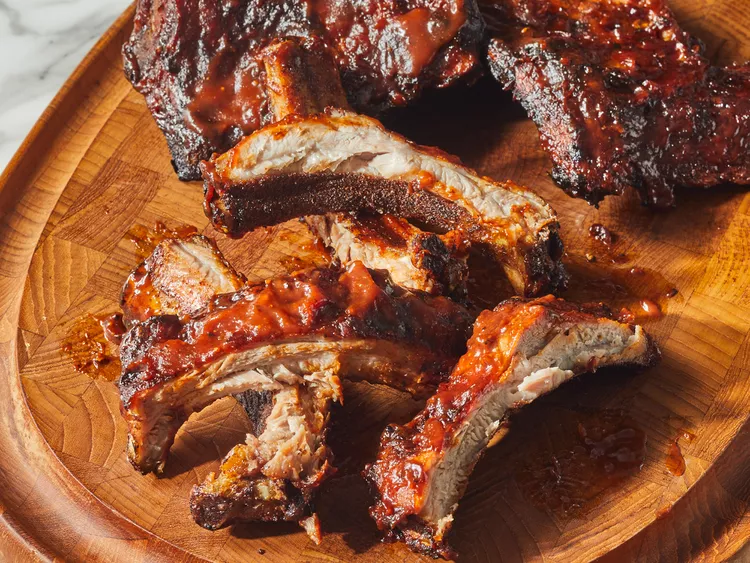
The Ultimate Crispy and Tender Air Fryer BBQ Baby Back Ribs
Barbecue ribs are a cornerstone of American comfort food, traditionally requiring hours of low-and-slow smoking to achieve that coveted tender texture and deep, caramelized crust. However, when time is short or outdoor cooking isn’t an option, the air fryer emerges as a revolutionary tool for the home cook. By utilizing powerful convection heat, an air fryer mimics the intense environment of a smoker, locking in juices while rendering fat to produce incredibly tender ribs with a beautifully charred exterior in a fraction of the time.
This recipe delivers competition-worthy BBQ baby back ribs in under an hour. The secret lies in a dual-stage cooking process: first, cooking the ribs tightly wrapped in foil to steam them to tender perfection, and second, blasting them with direct dry heat after slathering them in a rich barbecue sauce. The result is a perfect balance of smoky, sweet, savory, and tangy flavors with a texture that pulls cleanly away from the bone.
Ingredients
To achieve the best flavor and texture, select a high-quality, well-marbled rack of pork baby back ribs. This component breakdown ensures every layer—from the initial spice rub to the final glaze—is perfectly balanced.
For the Ribs
-
1 rack pork baby back ribs (approximately 2.5 to 3 pounds)
-
1 tablespoon yellow mustard (used strictly as a binder for the rub)
For the Signature Spice Rub
-
2 tablespoons dark brown sugar (packed)
-
1 tablespoon smoked paprika
-
1 teaspoon garlic powder
-
1 teaspoon onion powder
-
1 teaspoon kosher salt
-
1/2 teaspoon freshly cracked black pepper
-
1/2 teaspoon chili powder
-
1/4 teaspoon cayenne pepper (optional, for a subtle heat kick)
For the Glaze
-
1 cup high-quality barbecue sauce (smoky or hickory-flavored works best)
-
1 tablespoon apple cider vinegar (to balance the sweetness of the sauce)
Step-by-Step Instructions
Cooking ribs in an air fryer requires proper preparation and precise temperature control. Because space is limited compared to an outdoor grill, slicing the rack into manageable sections ensures even air circulation and uniform cooking.
Step 1: Prep the Ribs and Remove the Membrane
Lay the rack of ribs on a clean cutting board. Flip the ribs bone-side up to locate the silver skin—a tough, shiny membrane covering the back of the bones. Slide a butter knife under the membrane over one of the middle bones to loosen it. Grasp the edge of the membrane with a piece of paper towel for a secure grip and pull it off firmly in one smooth motion. Discard the membrane. Removing this skin ensures the spice rub penetrates the meat and prevents the ribs from curling during cooking.
Step 2: Slice and Bind
Cut the rack into 3 to 4 equal sections (usually 3 to 4 bones per section) so they fit comfortably inside your air fryer basket without overlapping excessively. Pat each section completely dry with paper towels. Lightly coat both sides of the ribs with the yellow mustard. The mustard acts purely as a binder to help the dry rub adhere to the meat; it will dissolve completely during cooking without leaving any mustard flavor behind.
Step 3: Apply the Spice Rub
In a small mixing bowl, combine the dark brown sugar, smoked paprika, garlic powder, onion powder, kosher salt, black pepper, chili powder, and cayenne pepper. Stir until completely blended and free of clumps. Generously sprinkle the spice rub over both sides of the rib sections, pressing the spices firmly into the meat with your hands to create an even coating.
Step 4: The Foil Wrap (Steaming Phase)
Tear off two large sheets of heavy-duty aluminum foil. Wrap the seasoned rib sections tightly in pairs or individually, creating secure, leak-proof foil packets. Wrapping the ribs tightly retains the natural moisture and fat rendered during cooking, essentially braising the meat from the inside out to guarantee tenderness.
Step 5: First Air Fry Cycle (Tenderizing)
Preheat your air fryer to 375°F (190°C). Place the foil-wrapped rib packets into the air fryer basket in a single layer. It is acceptable if they lean slightly against the sides, but ensure they are not completely stacked on top of one another. Cook at 375°F for 30 minutes.
Step 6: The Sauce and Crisp Phase
Carefully remove the foil packets from the air fryer. Open them cautiously, as hot steam will escape. Remove the rib sections from the foil and discard the rendered juices and foil sheets.
In a small bowl, whisk together the barbecue sauce and apple cider vinegar. Use a pastry brush to generously coat both sides of the ribs with the sauce mixture. Place the sauced rib sections directly back into the air fryer basket, meat-side up.
Step 7: Final Caramiziation
Air fry the sauced ribs at 400°F (205°C) for an additional 7 to 10 minutes. Watch closely during the final minutes; the high sugar content in the barbecue sauce will caramelize rapidly, creating beautiful, crispy, charred edges. The ribs are done when the sauce is bubbling and tacky, and the meat has visibly receded slightly from the bone tips. Remove and let rest for 5 minutes before slicing into individual bones and serving.
Expert Tips & Variations
Mastering air fryer barbecue ribs comes down to understanding layout and flavor modifications. These professional tips ensure success across different appliance sizes and dietary preferences.
-
Size Constraints & Airflow: Air circulation is the defining factor of air fryer efficiency. If you own a smaller 4-quart air fryer, cook the ribs in two separate batches during the final saucing phase to prevent overcrowding. Stacking sauced ribs will result in a soggy texture rather than a caramelized crust.
-
The Bend Test for Doneness: To verify the ribs are perfectly tender before adding the sauce, pick up a section from one end with kitchen tongs. The meat should bend easily in the middle, and the surface should crack slightly.
-
Sugar-Free / Keto Variation: To make this recipe completely low-carb and keto-friendly, substitute the dark brown sugar in the dry rub with an equal amount of a gold monk fruit sweetener erythro-sweetener blend. Pair it with a certified sugar-free barbecue sauce for the final glaze.
-
Lighter Option: If you prefer a leaner profile, you can utilize this exact technique with pork loin ribs or even high-quality turkey ribs, reducing the first cooking phase by 5 minutes due to the lower fat content.
Ingredient Substitution Reference
Serving Suggestions
Air fryer baby back ribs are rich and intensely savory, meaning they pair best with sides that offer crisp textures or refreshing acidity to cleanse the palate.
-
Classic Backyard Pairings: Serve these ribs alongside a cold, tangy vinegar-based coleslaw and buttery corn on the cob. The crisp crunch of the cabbage cuts through the decadence of the pork.
-
Comfort Food Feasts: Pair with baked macaroni and cheese or crispy air-fried french fries. The starchy components absorb the extra caramelized barbecue sauce beautifully.
-
Garnish: Finish the platter with a scattering of thinly sliced green onions or a few pickled jalapeño coins for a pop of freshness and color.
Storage & Make-Ahead Notes
Because ribs retain their moisture exceptionally well when cooked properly, leftovers can easily be stored and reheated without drying out the meat.
-
Refrigeration: Allow any leftover rib sections to cool completely to room temperature. Wrap them tightly in plastic wrap or heavy aluminum foil, then place them into an airtight container. Store in the refrigerator for up to 3 to 4 days.
-
Freezing: You can freeze cooked ribs for up to 3 months. Wrap the cooled, unsliced rib sections in a layer of plastic wrap followed by a layer of heavy foil to prevent freezer burn. Thaw completely in the refrigerator overnight before reheating.
-
Reheating Instructions: To maintain the ideal texture, avoid the microwave. Instead, place the leftover ribs back into the air fryer. Spritz them lightly with water or extra apple cider vinegar, cover loose with foil, and heat at 350°F (175°C) for 5 minutes. Remove the foil, apply a fresh brush of barbecue sauce, and air fry for an additional 2 to 3 minutes at 380°F until sizzling.
Nutrition Information
Disclaimer: The nutritional values provided below are calculated estimates based on standard ingredient profiles per single serving. Individual calculations may vary based on specific brands of barbecue sauce and the exact fat distribution of the pork rack.
Estimated Per Serving (Based on 4 Servings Total)
-
Calories: 540 kcal
-
Protein: 34 g
-
Fat: 32 g
-
Saturated Fat: 11 g
-
Carbohydrates: 28 g
-
Fiber: 1.5 g
-
Sugar: 23 g
-
Sodium: 980 mg