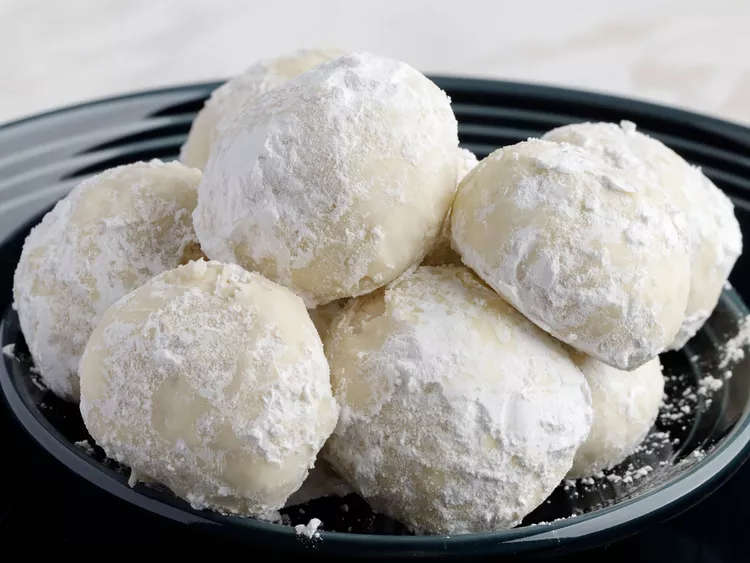
The Ultimate Russian Tea Cakes Recipe: A Masterclass in Buttery, Melt-in-Your-Mouth Cookies
There are few confections that bridge the gap between humble pantry staples and elegant holiday centerpieces quite like the Russian Tea Cake. Known by a dozen names—Mexican Wedding Cakes, Snowballs, or Polvorones—these spherical shortbread cookies are defined by their delicate, crumbly texture and a double-coating of snowy powdered sugar.
As a food journalist and chef, I find the beauty of this cookie lies in its restraint. There are no eggs to provide structure, no leavening agents to create lift. Instead, the recipe relies on the scientific ratio of high-quality butter to flour, resulting in a “short” crumb that dissolves the moment it hits the tongue.
This guide will walk you through the nuances of achieving the perfect texture, ensuring your tea cakes are never dry or tough, but instead possess that signature buttery richness that has made them a global favorite for generations.
Ingredients
To achieve the professional results seen in high-end bakeries, ensure your butter is at room temperature (approximately 65°F to 68°F) and your nuts are finely toasted before starting.
For the Cookie Dough
-
1 cup (2 sticks) Unsalted Butter, softened
-
1/2 cup Powdered Sugar (plus extra for coating)
-
1 teaspoon Pure Vanilla Extract
-
2 1/4 cups All-Purpose Flour, sifted
-
1/4 teaspoon Salt
-
3/4 cup Walnuts or Pecans, very finely chopped
For the Coating
-
1 1/2 cups Powdered Sugar, sifted into a shallow bowl
Step-by-Step Instructions
1. Prep the Oven and Pan
Preheat your oven to 400°F (205°C). Position your oven rack in the center. Line two large baking sheets with parchment paper or silicone baking mats. Unlike other cookies, Russian Tea Cakes require a higher temperature to “set” the shape quickly, preventing the butter from spreading and keeping the cookies spherical.
2. Cream the Butter and Sugar
In the bowl of a stand mixer fitted with the paddle attachment (or using a hand mixer), beat the softened butter and 1/2 cup of powdered sugar on medium speed. Continue for about 2 to 3 minutes until the mixture is pale, light, and fluffy. Scrape down the sides of the bowl, then beat in the vanilla extract.
3. Incorporate Dry Ingredients
In a separate bowl, whisk together the sifted flour and salt. With the mixer on its lowest setting, gradually add the flour mixture to the butter. Mix only until the flour just disappears. Over-mixing at this stage will develop gluten, leading to a tough cookie rather than a delicate one.
4. Fold in the Nuts
Gently fold in the finely chopped walnuts or pecans using a rubber spatula. The nuts should be evenly distributed throughout the dough. The dough will be thick and slightly crumbly but should hold together when pressed.
5. Shape the Cookies
Scoop approximately 1 tablespoon of dough at a time and roll it between your palms to form a 1-inch ball. Place the balls on the prepared baking sheets, spacing them about 1 inch apart. These cookies do not spread significantly, so you can fit about 20–24 per sheet.
6. The First Bake
Bake for 10 to 12 minutes. You are looking for the cookies to be set and firm to the touch, but not browned. The bottoms should be just barely golden. Over-baking will result in a dry interior.
7. The Two-Step Coating Process
This is the secret to the perfect “snowball” finish:
-
The First Coat: Let the cookies cool for only 3 to 5 minutes. While they are still warm (but handleable), roll them in the bowl of powdered sugar. The heat will melt the first layer of sugar slightly, creating a “glue” that adheres to the cookie.
-
The Second Coat: Place the coated cookies on a wire rack to cool completely. Once they are entirely cold, roll them in the powdered sugar a second time. This creates the thick, pristine white exterior that defines the classic Russian Tea Cake.
Expert Tips & Variations
Professional Culinary Secrets
-
The Nut Grind: For the best mouthfeel, pulse your nuts in a food processor until they are the size of coarse sand. If the pieces are too large, the cookies may crumble apart; if they are a paste, the dough will become oily.
-
Sifting is Mandatory: Always sift your powdered sugar. It is prone to clumping, and a clump of sugar inside the dough or on the coating will ruin the refined texture.
-
The Temperature Factor: If your kitchen is very warm and the dough feels oily, chill the rolled balls in the refrigerator for 15 minutes before baking. This ensures they maintain their round shape in the 400°F oven.
Ingredient Substitutions
-
Nut-Free Option: Substitute the nuts with toasted sunflower seeds or simply omit them and add an extra 1/4 cup of flour. However, the flavor will be less complex.
-
Gluten-Free: Use a high-quality 1:1 gluten-free baking flour blend that contains xanthan gum.
-
The Spice Route: Add 1/2 teaspoon of ground cinnamon or a pinch of cardamom to the flour for a warm, spiced profile.
Serving Suggestions
Russian Tea Cakes are the quintessential companion to bitter or tannic beverages.
-
Tea Pairing: Serve with a strong, loose-leaf Earl Grey or a smoky Lapsang Souchong. The bergamot in the tea cuts through the richness of the butter perfectly.
-
Coffee Pairing: A dark roast espresso or a standard Americano provides a sharp contrast to the sweet powdered sugar coating.
-
The Platter: For a holiday spread, nestle these among darker cookies like gingerbread or chocolate crinkles to create a striking visual contrast.
Storage & Make-Ahead Notes
Storage
-
Room Temperature: Store in an airtight container for up to 7 days. Ensure the container is kept in a cool, dry place; humidity is the enemy of the powdered sugar coating.
-
Freezing: These cookies freeze exceptionally well. You can freeze the baked, sugar-coated cookies for up to 3 months. When ready to serve, thaw at room temperature and give them a fresh “dusting” of powdered sugar to revive their appearance.
Make-Ahead
You can prepare the dough up to 2 days in advance. Keep it tightly wrapped in plastic wrap in the refrigerator. Let it sit at room temperature for 30 minutes before rolling to make the dough pliable.
Preparation Timeline
| Stage | Duration | Key Note |
| Prep/Chopping | 15 Mins | Toast nuts beforehand for deeper flavor. |
| Mixing | 10 Mins | Do not over-mix after adding flour. |
| Baking | 12 Mins | Oven must be preheated to 400°F. |
| Cooling/Coating | 45 Mins | Double-coat only after the second cooling. |
| Total Time | Approx. 1 Hour 22 Mins | Yields approx. 36 cookies. |
Nutrition Information
Per serving (1 cookie)
| Nutrient | Amount |
| Calories | 115 kcal |
| Protein | 1.2 g |
| Fat | 7.8 g |
| Saturated Fat | 3.5 g |
| Carbohydrates | 10.5 g |
| Fiber | 0.4 g |
| Sugar | 4.2 g |
| Sodium | 18 mg |
Note: Nutritional values are estimates based on standard ingredients.